Emerging Voices Lecture Series
The Emerging Voices in Jewish Studies lecture series showcases cutting-edge scholarship about Jews and Judaism. Highlighting the work of young scholars, the Emerging Voices series covers topics in Jewish history ranging from biblical antiquity to contemporary America. With a particular focus on work featuring intersections between Jewish Studies and other humanities fields, the Emerging Voices series aims to foster understanding of Jews and Judaism while contributing to the intellectual culture of the university. All events in the Emerging Voices series take place on Zoom, and are open to the general public.
Sarah Zager, "‘But I'm really a good person!’: Jewish Thought, Moral Responsibility, and Contemporary Moral Discourse,” September 8 at 6 PM EST
 Sarah Zager is a scholar of philosophy, religion, and Jewish thought. Her teaching and research focuses on how Jewish thought can contribute to contemporary debates in moral philosophy and feminist thought. She is currently assistant professor of religion at St. Olaf College.
Claims like “But, I’m a good person,” or “But, I just didn’t break any rules,” or “Say what you will, he’s a family man,” pervade public discourse about how to respond to moral wrongs, especially those rooted in racism and misogyny. This talk explores the structure and history of these kinds of unsatisfying responses to moral wrongs. I show that this pattern is actually grounded in a philosophical movement which has tried to separate a person’s character from their specific actions, and I argue that this philosophical movement is rooted in anti-Judaism. Using ideas from Maimonides, Moses Mendeslsohn and the Musar movement, I show that Jewish thought offers resources for addressing these kinds of moral dodges, thereby enriching public moral discussion.
This talk is co-sponsored by the Departments of Philosophy and Religious Studies, and the Center for Social Theory.
Register for Professor Zager's lecture on Zoom.
Dov Honick, “How Christians Invented the Talmud: Jewish Stories and the Making of Medieval Anti-Judaism,” October 22 at 6 PM EST
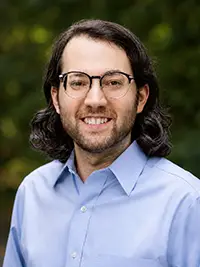 Dov Honick is a postdoctoral researcher at the École pratique des hautes études in Paris, where he works with MiDRASH, an ERC Synergy project on digital Hebrew paleography and the transmission of rabbinic literature. His research explores intellectual exchange between Jews and Christians in the medieval world, with particular interests in Christian Hebraism, rabbinic narrative and midrash, Hebrew manuscript culture, and the movement of Jewish stories across religious and communal boundaries. He received his Ph.D. in Medieval Studies from the University of Notre Dame in 2024 and has held fellowships and research appointments at the American Academy in Rome, the Oxford Centre for Hebrew and Jewish Studies, and, most recently, Yale University.
In the twelfth century, Christian writers began to describe the Talmud as a dangerous Jewish book filled with secrets, errors, and blasphemies. But what did these writers actually know when they claimed to know the Talmud? Both medieval polemicists and many modern historians have taken these references at face value, treating them as evidence of direct Christian engagement with the Talmud. This talk revisits some of the earliest Latin Christian encounters with rabbinic tradition and argues that their “Talmud” was not simply the Babylonian Talmud as a book. It was a constructed object, assembled from Jewish stories, homilies, liturgical traditions, and manuscript collections that circulated across medieval Jewish communities.
By following rabbinic tales as they moved from Jewish narrative culture into Christian polemic, this talk shows how Christians transformed Jewish sages into witnesses against Judaism itself. At stake is not only a revision to the history of Christian Hebraism, but a broader question: what happens when one religious community learns about another through fragments, translations, rumors, and hostile interpretation?
This talk is co-sponsored by the Department of Religious Studies and the Marco Institute for Medieval and Renaissance Studies.
Register for Professor Honick's lecture on Zoom.
Sarah Schwartzman Ramsey, “Sacred Storytelling as Lived Religion in Contemporary Jewish American Women’s Fiction,” November 10 at 6 PM EST
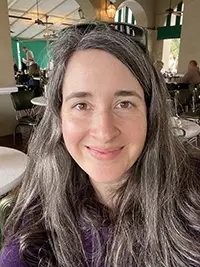 Sarah Schwartzman Ramsey (she/her) is a Lecturer in the University of Colorado Boulder English department and Continuing Education division. Her recently completed dissertation examines how contemporary Jewish American novelists reconceptualize and generate religious thought and practice. Her work, published in Studies in American Jewish Literature, The Journal of Feminist Studies in Religion, and forthcoming in Shofar, examines intergenerational and transtemporal intimacies between characters. She identifies in literature the reverential, textual, and collaborative practices that cultivate new social ties between characters across time, and she interprets those ritualized forms of contact—mediated via letters, diaries, genre fiction, and alternative media—as religious, in that they bring symbolic or spectral ancestors and living readers into relationship.
This talk discusses a trope in popular contemporary novels by Jewish American women writers. Protagonists befriend Jewish ancestral figures through historical salvage, matrilineal inheritance, and intersubjective storytelling. For instance, Rachel Kadish’s 2017 bestselling novel, The Weight of Ink, presents a twenty-first century woman’s archival work as sacred labor that elicits feelings of heightened intimacy with a previously unknown, seventeenth-century Jewish scribe. An array of novels liken narrative custodianship to a gift between friends, and textual practices—careful interpretation, thorough research, shared findings—conjure affection between persons centuries apart and engender community among present-day readers. These literary and analytic practices, oriented to historic women’s writings rather than Torah or Talmud, should be recognized as a form of Jewish literacy foundational to women’s lived religion.
This talk is co-sponsored by the Departments of Religious Studies and English, and the Center for Social Theory.
Register for Professor Schwartzman Ramsey's lecture on Zoom.
Julia Olson, “Undoing Masculinity: The ‘Woman as Humiliator’ in the Book of Judges,” February 16 at 6 PM EST
 Julia Olson is currently serving as a Visiting Assistant Professor in Judaic Studies at the University of Cincinnati. She received her Ph.D. in Judaic, Hebraic, and Cognate Studies from Hebrew Union College in May of 2025. Her research examines the ideology of subordination that affects female characters throughout the Hebrew Bible and the ways that it influences biblical interpretation. Prior to her work at UC, she held teaching fellowships at Xavier University and the University of Dayton where she taught courses on biblical interpretation and Hebrew language as well as the history and archaeology of the ancient Middle East and Eastern Mediterranean.
Almost every male character in the book of Judges is deeply flawed, experiencing both military and personal failures which are typically brought about by a woman. By intertwining anthropologist Maurice Bloch’s theories of language formalization and the subordination of women, I seek to highlight a formalized character in the book of Judges, the “woman as humiliator.” Despite her varied appearances and methods of humiliation, her function is consistent throughout the book. Because it is her only function, she is significantly underdeveloped in every other way. I will argue that author of Judges employs a critique of war and violence by using this formalized woman to humiliate traditional masculine leadership.
This talk is co-sponsored by the Department of Religious Studies and the Center for Social Theory.
Register for Professor Olson's lecture on Zoom.
Rachel Slutsky, “Discerning the Deity’s Will in Second Temple Literature,” March 4 at 6 PM EST
 Rachel Slutsky, Ph.D., is the Monsignor John Oesterreicher Assistant Professor of Jewish Studies and Jewish-Christian Relations in Antiquity at Seton Hall University. Slutsky's work explores the ways in which ancient and modern discourses employ Jewish law to cultivate communal self-understanding in juxtaposition to other Jews and the non-Jewish world more broadly. She has forthcoming articles on related topics in both the Review of Rabbinic Judaism and Jewish Studies Quarterly, and she is currently working on her first monograph. She completed her doctorate in ancient Judaism at Harvard University in May 2022, where she held the Isadore Twersky Fellowship (2021-2022) and served as the assistant director of undergraduate studies in the Committee on the Study of Religion (2020-2021).
This talk focuses on the texts of Ezra-Nehemiah, Esther, and Daniel. One notable commonality between them is prophecy’s virtual absence. This is curious in light of prophecy’s utility, specifically, as an epistemological tool to convey knowledge about the Deity and the Deity’s will. How did these three texts deal with the epistemological vacuum left in prophecy’s absence? Certain common beliefs and practices emerge in these texts regarding means of determining the divine will: first, a belief in Torah and its pedagogues to guide the people toward right action and therefore away from punishment; second, a belief in individual prayer as the way to interact directly with God and possibly persuade the divine mind to act within the world; third, a Heilsgeschichte affirming that God continues to be a God of salvation; and fourth, a theology of punishment which does not require consultation with a prophet.
Register for Professor Slutsky's lecture on Zoom.
Oren Yirmiya, “An Intertextual Alterity: North African Piyyut and Modern Mizrahi Hebrew Poetry,” April 6 at 6 PM EST
 Oren Yirmiya is an Assistant Professor of Hebrew Literature in the Department of Near and Middle Eastern Civilizations and the Anne Tanenbaum Centre for Jewish Studies at the University of Toronto. His research asks what it means to be a person in and through poetry, focusing on Mizrahi Hebrew poetry and piyyut as sites where devotional practice, political critique, and lyric form converge around questions of personhood and shared language. He is currently completing the book manuscript The Other('s) Lyric: Piyyut, Identity, and Alterity in Modern Mizrahi Hebrew Poetry and is co-editing, with Iris Rachamimov, a volume on trans history and culture in Israel
This lecture examines the rich world of piyyut, liturgical Hebrew poetry composed for synagogue performance, communal worship, and life cycle events. It asks how we should think about modern Hebrew literature's so-called "revival" when piyyut never died out but continued to be written and sung among Jewish communities across the Middle East and North Africa throughout the medieval and modern periods. In doing so, the lecture challenges conventional narratives of Hebrew literary and religious history, which overlook continuous living devotional traditions in the region while overstating the creative ingenuity of the rupture caused by European Jewish secularization during the nineteenth century. Tracing piyyut's enduring legacy and its influence on the emergence of Mizrahi poetry in 1970s Israel, the lecture argues that attending to liturgical and devotional composition offers a fuller picture of Jewish textual modernity. Through comparative readings of early modern piyyut and mid-twentieth-century Mizrahi poetry, the lecture introduces the concept of "polyphonic supplementary intertextuality" to show how both poetic corpora weave multiple voices through citation and allusion, drawing on biblical, Talmudic, and Midrashic sources to critique social marginalization, represent transgressive desire, and articulate a model of selfhood constituted through heteronomous communal religious commitment rather than individual autonomy. This framework ultimately challenges dominant paradigms in modern Hebrew studies and the study of Jewish religious practice, suggesting that the boundary between devotional and secular writing in modern Jewish life is far more porous than has been assumed, and that this porosity carries its own liberatory political power.
This talk is co-sponsored by the Departments of Religious Studies and World Languages and Cultures, the Program in Middle East Studies, the Center for Social Theory, and the Marco Institute for Medieval and Renaissance Studies.
Register for Professor Yirmiya's lecture on Zoom.
The Emerging Voices in Jewish Studies lecture series showcases cutting-edge scholarship about Jews and Judaism. Highlighting the work of young scholars, the Emerging Voices series covers topics in Jewish history ranging from biblical antiquity to contemporary America. With a particular focus on work featuring intersections between Jewish Studies and other humanities fields, the Emerging Voices series aims to foster understanding of Jews and Judaism while contributing to the intellectual culture of the university.
Pratima Gopalakrishnan, “Indian Ocean Trade in the 11th and 12th Centuries: A View from the Cairo Geniza,” April 23 at 6 PM EST
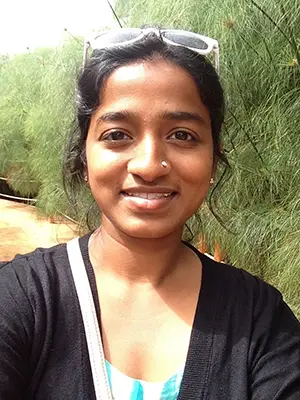 Pratima Gopalakrishnan is a historian of the Indian Ocean who works with documents from the Cairo Geniza. She has additional interests in labor and gender, and she is also a scholar of rabbinic texts. She received her PhD in Religious Studies from Yale University, with a Certificate in Women’s, Gender and Sexuality Studies. She works as a Senior Researcher and Project Coordinator for the “Indian Ocean Documents from the Cairo Geniza” project at the Princeton Geniza Lab. Prior to working at the PGL, Gopalakrishnan held postdoctoral fellowships at the University of Texas at Austin and Duke University. She also held visiting fellowships at the Albright Institute for Archaeological Research and the Katz Center for Judaic Studies.
During the eleventh and twelfth centuries, Jewish merchants — many of them originally from North Africa but with families that had settled in Fustat (Old Cairo) for one or more generations — were involved in long-distance trade of goods to and from the Indian Ocean littoral. The goods that passed east and west in this trade included dozens of varieties of textiles, botanical products and spices, metal objects and household items. This lecture explores the lives of these merchants and of the goods for which they risked perilous land and sea voyages. Jewish merchants often went via Nile and Red Sea ports all the way to present-day Gujarat and the Malabar coast to sell and buy goods. They kept records of their commercial transactions — shot through with their hopes and fears — in hundreds of letters, accounts and legal documents that were deposited in the Cairo Geniza. This lecture considers what these records can tell us about the merchants, as well as the free and enslaved laborers, middlemen, and the merchants’ own families back home who made their ventures possible.
This event is co-sponsored by History, Middle East Studies, the Marco Institute, and Religious Studies.
Register for Professor Gopalakrishnan's lecture on Zoom.
Emily Filler, “Plain Violence: Against Reparative Readings of the Hebrew Bible,” March 24 at 6 PM EST
 Emily Filler is the Wallerstein Chair in Jewish Studies at Drew University, where she teaches modern Jewish philosophy, ethics, and classical Jewish texts. Her first book in progress critiques modern Jewish attempts to “repair” violent or ethically troubling biblical passages, and argues for the surprising political virtues of plain sense interpretation. She is co-editor of the Journal of Jewish Ethics, as well as Modern Jewish Ethics Since 1970.
In response to the frequent violence described or commanded in the Jewish Bible, modern readers commonly assert the need for interpretations that will "repair" the narrative or command in question, thus limiting the text's ability to inspire "real world" violence. I argue, however, that such attempts introduce their own problems, and demonstrate the ability of plain sense interpretation both to better address biblical violence and to maintain the communal centrality of the Bible for Jewish readers.
This event is co-sponsored by Political Science, Philosophy, and the Center for Social Theory.
Register for Professor Filler's lecture on Zoom.
Erez DeGolan, “Jewish Joy, Imperial Power, and the Rabbis of Roman Palestine,” February 24 at 6 PM EST
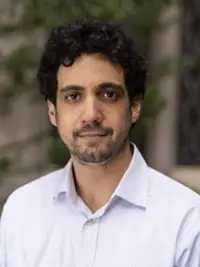 Erez DeGolan is an Assistant Professor of Classical Rabbinic Judaism in the Department of Theology at Fordham University. His research combines textual, historical, and critical methods in thematic studies of rabbinic literature in Hebrew and Aramaic from between the first and seventh centuries (CE). His work appeared in the Ancient Jew Review, Jewish Law Association Studies, the Journal of Textual Reasoning, and the Journal of the American Academy of Religion. Erez holds a B.A. in Hebrew Literature and Middle Eastern History from Tel-Aviv University, an M.T.S. in Jewish Studies from Harvard Divinity School, and a Ph.D. in Religious Studies from Columbia University, and has served as the 2023-25 Mellon Postdoctoral Fellow in Jewish Studies at Wellesley College.
Jewish history under Roman rule has long been told as “a history of suffering.” From this perspective, joy is considered incongruous with the experience of the rabbis of Roman Palestine. This talk puts joy back in rabbinic history. It is not, however, a feel-good lecture (at least not only). Instead, the talk will explore what rabbinic literature reveals about the nexus between public joy and imperial power in Palestine, elsewhere in the Roman world, and even within asymmetric political systems of other times and places.
This event is co-sponsored by Classics, Middle East Studies, the Marco Institute, and Religious Studies.
Register for Professor DeGolan's lecture on Zoom.
Judah Isseroff, “Hannah Arendt’s Lessons for an Age of Jewish Power and Fear,” November 13, 2025 at 6 PM EST
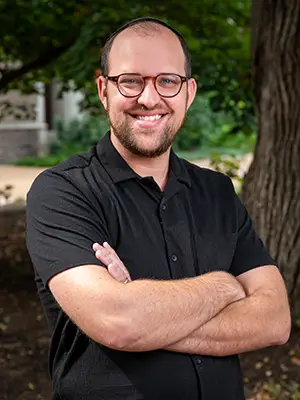 Judah Isseroff is a visiting lecturer in the department of Jewish, Islamic, and Middle Eastern Studies at Washington University in St. Louis. He is at work on a book called Judaism Politicized: Hannah Arendt's Lessons for an Age of Jewish Power and Fear.
This talk will consider Hannah Arendt's claim from her 1967 preface to Origins of Totalitarianism that Zionism is the "only direct consequence of antisemitism." There are two possible understandings of Arendt's provocative statement. The first is that Zionism was born of antisemitism in order to solve the problem of antisemitism. The second is that Zionism was the Jewish people's way of adapting itself to the logic of antisemitism. I will argue that the tension between these two interpretations remains an unresolved and damaging feature of Jewish politics today. I will explore the surprising resilience of the idea that antisemitism is actually good for the Jews.
This event is co-sponsored by Philosophy, Political Science, and the Center for Social Theory.
To register for this event, click here.
Sam Shuman, “A Political Theology of Hospitality: Reviving a Hasidic Jewish Saint for the Twenty-First Century,” October 16, 2025 at 6 PM EST
 Sam Shuman is Assistant Professor in the Department of Religious Studies and a core faculty member in the Jewish Studies Program at the University of Virginia (UVA). Shuman researches Hasidic Judaism within a global context to rethink larger questions about race and religion, global capitalism, gender and sexuality, sovereignty and empire. They are currently working on their first book, Of Mice and Hasidic Men, which explores the various forms of saintly mediation performed by Reb Shayele, a Hasidic miracle-worker (1851-1925). Shuman’s work has appeared in the Jewish Quarterly Review, Shofar, Les Cahiers de la Mémoire Contemporaine, Images: A Journal of Jewish Art & Visual Culture and Religions, and as chapters in two forthcoming edited volumes (Critical Jewish Studies Now and How Transparency Works).
 This lecture focuses on an emergent, transnational Hasidic revival movement centered around the Kerestirer Rebbe, Yeshaya Steiner (“Shayele”), a Hungarian “miracle-worker” who lived in Hungary from 1851-1925. His iconic portrait is commonly associated with mystical protection against the infestation of rodents in Jewish homes and businesses. Shuman reveals how this is only one small piece of Shayele’s broader populist appeal, however. They do this by interweaving hagiographic texts, Hasidic social media, and ethnography with anthropological theory and political theology on hospitality, sovereignty, and patronage.
This event is co-sponsored by Anthropology and the Center for Social Theory.
To register for this event, click here.
Check out this interview with Dr. Shuman on the UTKReligion Podcast.
Cara Rock-Singer, “The Modern Mikveh Movement: The Ritual Bath and the Politics of Jewish Bodily Technology,” September 16, 2025 at 6 PM EST
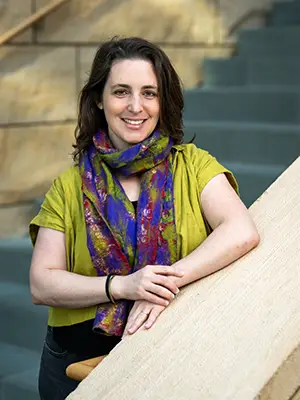 Cara Rock-Singer is the Lama Shetzer Assistant Professor of Judaic Studies at the University of Michigan, Ann Arbor. Rock-Singer is also affiliated with the Gender and Women's Studies Department and the Science and Technology Studies Program. Her book manuscript, Gestating Judaism: The Corporeal Technologies of American Jewish Religion, is under contract with the University of Chicago Press, Class 200 Series.
“The Modern Mikveh Movement: The Ritual Bath and the Politics of Jewish Bodily Technology” will explore the activities of a growing collection of grassroots projects across North America, Israel, and beyond. This movement is distinguished by its work to reclaim what many feminists have considered to be an irredeemably misogynistic form of bodily discipline: post-menstrual immersion in the mikveh, the Jewish ritual bath. Through ethnographic immersions into the mikveh, I will show how diverse Jewish subjects enlist a bodily ritual technology to transform not only the self but also communal politics.
This event is co-sponsored by Anthropology, the Women, Gender, and Sexuality program, the Center for Social Theory, and the Science, Technology, Health, and Society Program.
To register for this event, click here.
Check out this interview with Dr. Rock-Singer on the UTKReligion Podcast.
Eli Rosenblatt, "Black Christian Hebraism: Charles Lee Russell and the Afro-Protestant Encounter with Rabbinic Culture, 1918-1948" | April 9, 2025
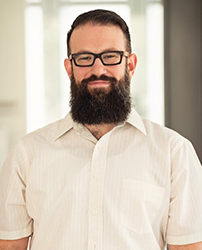 Eli Rosenblatt is an Assistant Professor in the Department of Religion at the University of Illinois Urbana-Champaign. His interests span Jewish ideas and cultures across the Americas, with particular interests in the United States and the Caribbean. His forthcoming monograph, titled Creole Israel: The Jewish Atlantic World After Slavery, takes up traditional tools in Jewish Studies - Hebrew, Yiddish and co-territorial languages - but repositions multilingualism to reconsider the historical role of Creole and African Diasporic cultural formations in American Jewish life.
 This lecture examines the life and scholarship of Charles Lee Russell (1886-1948), Bishop of the CME Church, scholar of the Hebrew language, and the author of the only known study of the Babylonian Talmud by an African American. Russell’s study of Jewish languages and his translation of rabbinic literature, which he first encountered in Thomasville, Georgia in the late 1910s, is an overlooked view onto the evolution of the Black church in its theological and political relations with non-Christian traditions and Jewish culture and communities. Russell’s scholarship, activism, and the cultural world it signifies uncovers a decades long instance of dialogue between a variety of Afro-Protestant intellectuals and traditionally educated Eastern Ashkenazic Jews rooted in the cooperative interpretation of Hebrew and Aramaic texts and their theo-political implications.
To register for this talk, please click here.
Chumie Juni, "Halakhic Women? Pious Gender Formation in Ultra-Orthodox Women's Practice of Daily Prayer" | April 3, 2025 at 6pm EST
 Nechama (Chumie) Juni is assistant professor of religion at Carleton College in Northfield, Minnesota. Her work lies at the intersections of Modern Judaism, theory of religion, gender studies, and law. Her first book project, Halakhic Women: Gender and Ritual Conflict is a study of contemporary American Ultra-Orthodox women's practice of positive timebound commandments.
This talk will examine the ways that contemporary American Ultra-Orthodox women's practices of daily prayer defy expected gender categories. I will trace key historical and structural conditions that have combined to shape Ultra-Orthodox womanhood today as a space of conflicted gender formation. Against the typical scholarly move that casts gender-traditional women as wholly feminine, I will show how daily prayer calls upon women to enact multiple forms of gender in their earnest pursuit of piety.
To register for this talk, please click here. When you register, you will be asked for a Net ID. If you do not have a UT Net ID, you can put in any text (your name, for example) and the registration will be successful.
Shulamit Shinnar, "Illness, Disability, and Identity: Rabbinic Medical Culture in Late Antiquity" | March 26, 2025 at 6pm EST
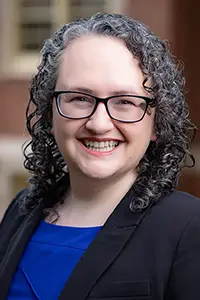 Shulamit Shinnar is an Assistant Professor in the Department of Religion at Florida State University. She specializes in ancient Jewish history with a focus on the production of rabbinic literature in Roman Palestine and Sassanian Babylonian. Her study of Jewish culture and textual traditions is informed by methodological questions from the history of science and medicine, medical anthropology, post-colonial theory, the study of gender and sexuality, and disability studies. Currently, she is working on a monograph entitled "'The Best of Doctors Go to Hell': Rabbinic Medical Culture in Late Antiquity" that examines Jewish medical culture in Late Antiquity, focusing on medicine as a site for social encounter and cultural exchange between different ethnic, religious, and gender identities.
As scholars from the field of disability studies have argued, the category of “disability,” like gender, presents a fundamental category of analysis for historians to examine power relations and identity formation. In this context, this talk draws on theoretical frameworks from disability studies to examine the representation of leprosy and disabling skin diseases in late antique rabbinic literature. It demonstrates how for the rabbis, the disabled body, or the “deviant other” body, functioned as a marker for the boundaries of humanness, inventing difference and drawing rabbinic communal boundaries around conceptions of ideal and transgressive bodies. The rabbinic attitudes towards individuals suffering with leprosy become tied to a rabbinic concern with communal identity and to debates regarding the communal responsibility to provide medical care.
To register for this talk, please click here.
Emilie Amar-Zifkin, Emilie Amar Zifkin, "Being Seen Seeing: Jews, Christians, and the Medieval Public Eye" | March 11, 2025 at 6pm EST
 Dr. Emilie Amar-Zifkin is the Flegg Postdoctoral Fellow in Jewish Studies at McGill University, where she works on medieval history, disability studies, and ghosts. She just finished a year at the University of Toronto, where she was the Kaplan Postdoctoral Fellow in Jewish-Christian Relations, and where she explored sensory studies as a pedagogical framework for the study of medieval Jewish history. She holds a Ph.D. in Jewish Studies from Yale University, an M.A. in the History of Judaism from the University of Chicago Divinity School, and a B.A in from Fordham University in Theology and Stage Management. She is currently working on her first monograph, called Acting out in Ashkenaz, which offers an analysis of Jewish-Christian relations in medieval towns that conceptualizes both the history and the primary sources as texts with their own theatrical components.
This presentation suggests that reciprocal spectatorship — Christian public seeing of Jews and Jewish public seeing of Christians — can inform a more nuanced reading of Jewish-Christian public interaction than the standard narrative of persecution and mutual ill-will would indicate. An examination of primary sources on distinctive clothing, the role of Jews in major civic events, and rules and rituals of daily seeing and being seen demonstrates the importance of vision and visuality within the greater medieval sensory landscape. Both Jews and Christians conceived of vision as a profoundly active sense that could literally touch the object of sight, a notion that had serious consequences for spectators on both sides.
To register for this talk, please click here. When you register, you will be asked for a Net ID. If you do not have a UT Net ID, you can put in any text (your name, for example) and the registration will be successful.
Sari Fein, “'I urge the Spirit Who its on the Womb': Jewish Women’s Reproductive Practice in the Ancient World” | February 5, 2025, at 6pm EST
 Sari Fein is Visiting Assistant Professor in Jewish Studies at Smith College in Northampton, MA. She received her PhD in 2022 from Brandeis University with a dissertation entitled Conceiving Motherhood: The Reception of Biblical Mothers in the Early Jewish Imagination, which is currently being reworked for publication as a monograph. Her current research uses textual and material sources to interrogate how women exercised agency and authority over their reproductive lives in Jewish antiquity, and an article on this topic is forthcoming in Advances in Near Eastern and Biblical Research.
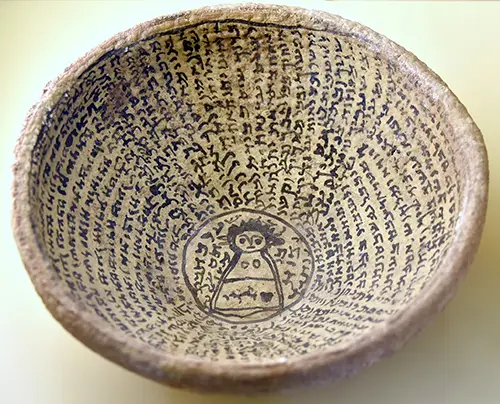 In the ancient world, reproduction was critically important yet fraught with risk. Survival of not only the family but the community itself was dependent upon women's success in conceiving, bearing, and raising children. This talk explores how women in antiquity navigated these physical and social vulnerabilities and exercised agency over their reproductive lives. We will explore texts from the Torah and rabbinic literature alongside magical objects such as incantation bowls and amulets for what they reveal about women's reproductive experiences in Jewish antiquity. Through this conversation, we will gain a deeper understanding about how Jews in the ancient world understood larger issues such as bodies, health, communal identity, and religious belief.
To register for this talk, please click here.